

Fielddio is an independent publisher, not an insurance agent or broker. This guide is general information, not insurance or legal advice. Rules, prices and policy wording vary by state and insurer, so confirm the details with a licensed agent and your state agencies before you buy. Fielddio may earn a commission from some partner links; that never changes what we recommend or how we describe a policy.
The short answer: most cleaning businesses start with general liability insurance, add a janitorial bond when clients ask for one, add workers’ compensation once they hire employees (state law usually requires it, with thresholds that vary by state), and add auto coverage if anyone drives for the business. The details that cause the most trouble for cleaners are not on the quote page: damage to items you are handling, lost client keys, and whether your helpers are employees or contractors. This guide covers all three.
Quick Answer: What Insurance Does a Cleaning Business Need?
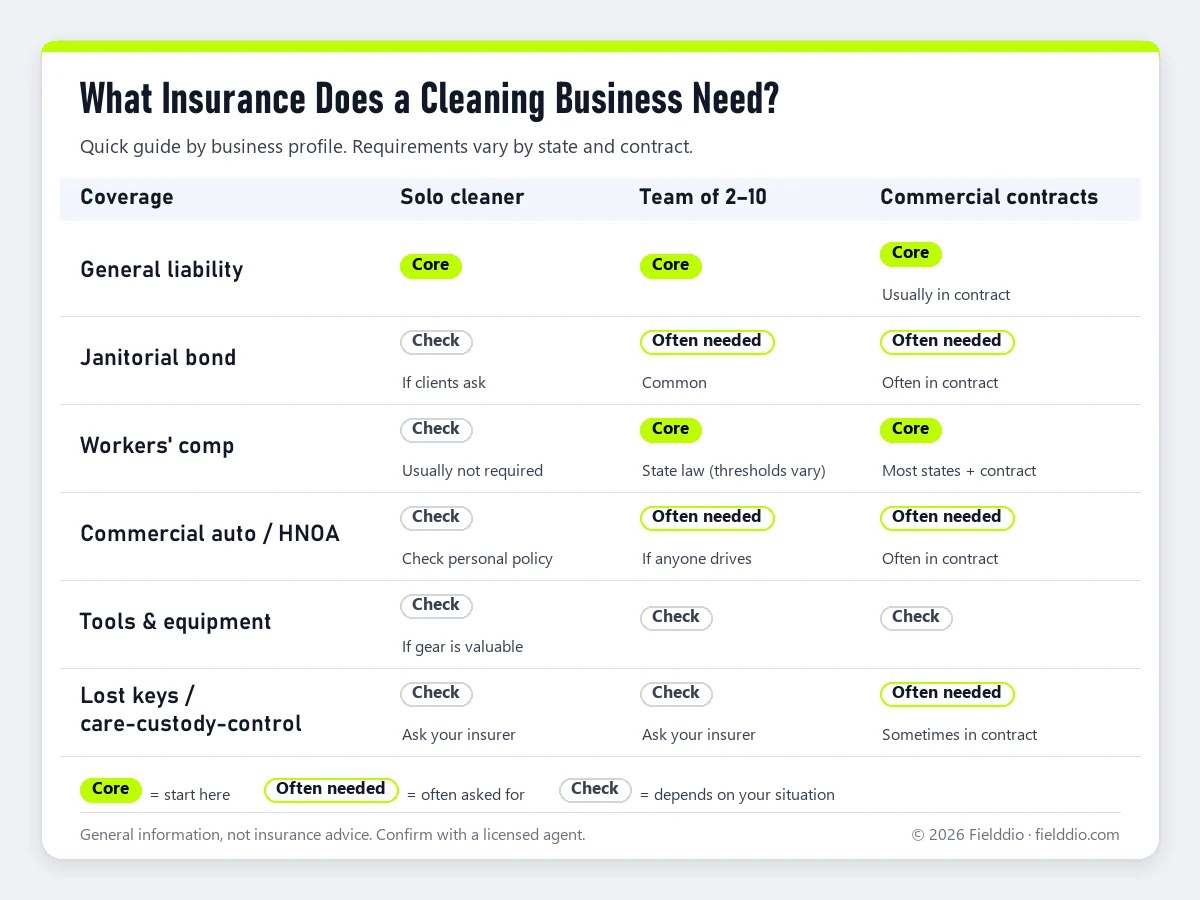
| Coverage | What it pays for | Solo cleaner | Team of 2–10 | Commercial / janitorial contracts |
|---|---|---|---|---|
| General liability | Injuries to clients and damage to their property, plus legal defense | Strongly recommended | Strongly recommended | Usually required by contract |
| Janitorial bond | Reimburses a client when an employee steals from them | When clients ask (ask whether it covers you as the owner) | Common | Often required by contract |
| Workers’ compensation | Medical bills and lost wages for injured employees | Usually not required (no employees) | Required in most states once you pass your state’s threshold | Required by law in most states (thresholds vary) and usually by contract |
| Commercial auto / hired & non-owned auto | Accidents while driving for the business | Check your personal policy’s business-use rules | If you or staff drive for work | Often required by contract |
| Tools & equipment | Your vacuums, extractors and supplies, on site or in transit | Useful if your gear is valuable | Useful | Useful |
| Add-ons: lost keys, care-custody-control | Rekeying locks; damage to items you are handling | Worth asking about | Worth asking about | Sometimes required by contract |
Required by Law vs. Required by Clients vs. Recommended
Cleaners hear “you need to be bonded and insured” all the time. Some of that comes from the law, most of it comes from clients. Knowing which is which keeps you from overbuying, and from missing something you actually must have.
What state law typically requires
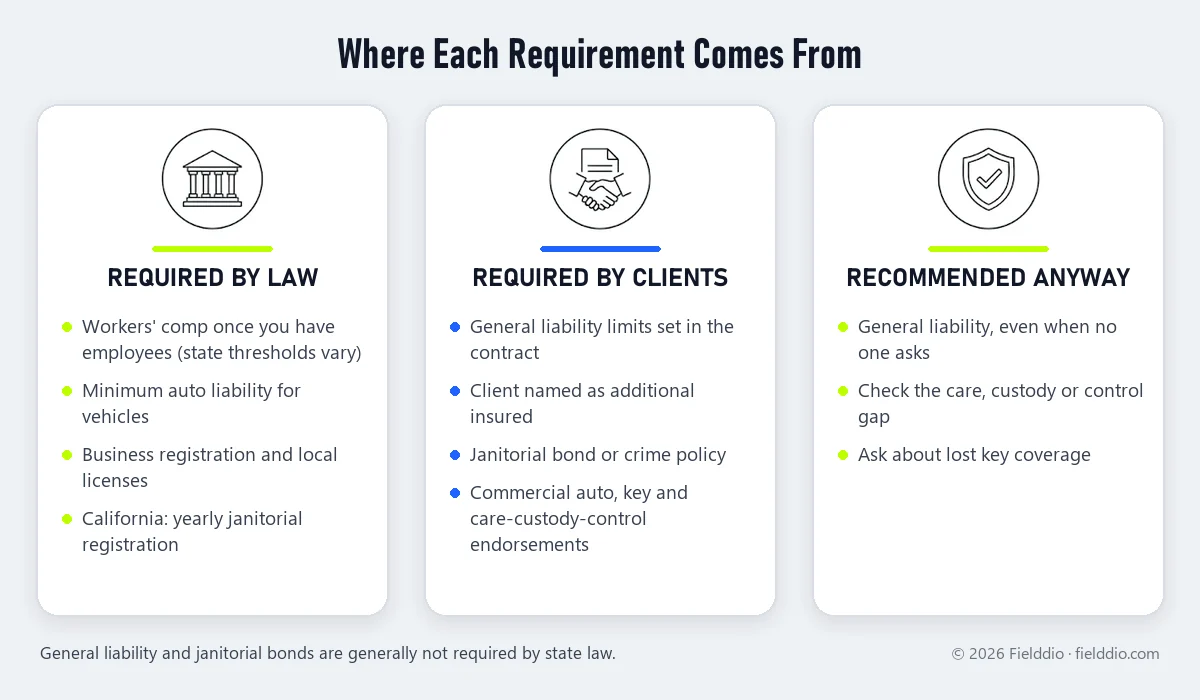
Workers’ compensation, once you have employees. Workers’ comp is governed by each state, not by the federal government, and the employee threshold differs. A few examples, taken from official state sources:
| State | When workers’ comp is required (non-construction businesses) | Source |
|---|---|---|
| California | One or more employees | CA Division of Workers’ Compensation |
| New York | “Most employers of one or more employees” | NY Workers’ Compensation Board |
| Georgia | Three or more employees, part-time or full-time | Georgia State Board of Workers’ Compensation |
| North Carolina | Three or more employees (in general) | NC Industrial Commission |
| Florida | Four or more employees, including corporate officers and LLC members | Florida Division of Workers’ Compensation |
| Alabama | Five or more employees | Alabama Department of Labor |
| Missouri | Five or more employees | Missouri Department of Labor |
| Texas | Optional for most private employers | Texas Department of Insurance |
Two details matter for small cleaning companies. First, some states count owners: Florida, for example, counts corporate officers and LLC members toward the four-employee threshold. Second, a sole proprietor with no employees is generally not required to carry workers’ comp — New York says so explicitly (NY WCB) — though you can usually buy a policy for yourself. Check your own state’s workers’ comp agency before you hire.
Minimum auto liability. Nearly every state requires a minimum amount of auto liability insurance (New Hampshire is the notable exception, though it still holds at-fault drivers financially responsible). Texas, for example, requires at least $30,000 per injured person, $60,000 per accident and $25,000 for property damage (Texas Department of Insurance). The law sets the minimum; whether your personal policy covers business driving is a separate question, covered below.
Registration and local licenses. There is usually no state “cleaning license,” but you will typically need to register the business, get any city or county business license (called a business tax receipt in some places), and in some states collect sales tax on cleaning services. Pennsylvania, for instance, says residential and commercial building cleaning is subject to sales tax there (PA Business One-Stop Shop). One notable exception: California requires janitorial businesses to register every year with the Labor Commissioner ($500 fee). That includes companies that use subcontracted or franchised janitors rather than employees. Operating unregistered can cost $100 a day, up to $10,000. Businesses that only clean residential dwellings (houses, condos, mobile homes) don’t have to register (California DIR).
General liability and janitorial bonds are generally not required by state law for cleaning businesses. That is where clients come in.
What client contracts often require
Commercial clients, property managers and public agencies write insurance requirements into their contracts. Real examples from published janitorial bids:
- District of Columbia (Department of General Services, citywide janitorial RFP, 2021) (DC DGS):
- General liability: at least $1,000,000 per occurrence and $2,000,000 aggregate (the aggregate is the most the policy pays in a policy year).
- The District named as an additional insured, meaning the client is covered under your policy for claims arising from your work.
- Commercial auto: $1,000,000 combined single limit.
- A crime policy with third-party fidelity coverage of $10,000 per occurrence.
- No work until certificates of insurance are accepted.
- University of Central Arkansas (custodial services RFP, 2024) (UCA):
- General liability: $1,000,000 / $2,000,000, with endorsements (add-ons that change what the policy covers) for master key coverage and care-custody-control coverage.
- Auto: $1,000,000.
- Workers’ comp with $1,000,000 of employer’s liability.
- A crime policy or fidelity bond of $50,000 or 50% of the contract value, whichever is greater.
Residential clients rarely send a contract like this, but many will ask whether you are “bonded and insured” before they hand over a key. You prove coverage with a certificate of insurance; our guide on how to send a certificate of insurance (COI) walks through it.
What we recommend anyway
Even when nothing is required, general liability is the policy we would not skip: one injured client or one damaged floor can cost more than years of premiums. Read your quote for the two cleaning-specific gaps below (items in your care and lost keys) before you sign.
Core Coverages for Cleaning Businesses
General liability (and the gap most cleaners miss)
General liability pays when your work injures someone else or damages their property: a client slips on a floor you just mopped, your floor machine scars a hardwood floor, or a cleaning chemical makes someone sick. It also pays for your legal defense and any settlement or judgment, up to your policy limits. It does not cover your own employees’ injuries or your vehicles (Insureon). For the mechanics of limits, aggregates and additional insureds, see how general liability insurance works.
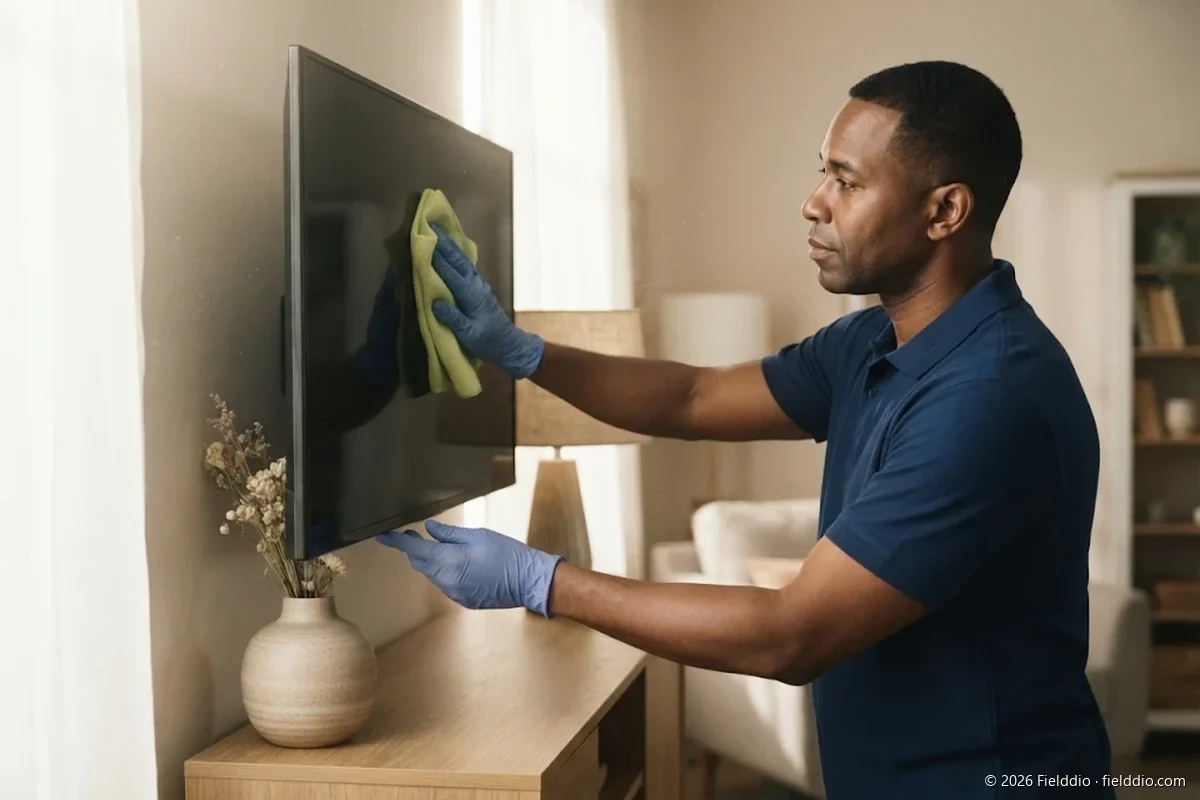
The care, custody and control gap. Many liability policies exclude damage to property that is in your “care, custody or control.” For a cleaner, that can mean the lamp you are dusting or the TV you are wiping down. Insureon gives exactly this example: if an employee knocks a flat-screen TV off the wall while dusting it, general liability “probably won’t cover the cost,” and it recommends adding a care, custody or control endorsement (Insureon). Other insurers’ marketing describes similar accidents as covered (for example, The Hartford and ERGO NEXT), and courts have read this exclusion in different ways (IRMI). The only reliable answer is in your policy. Ask the insurer, in writing, whether damage to an item you are handling is covered. If not, ask what closes the gap: a care, custody or control endorsement on your liability policy, or separate bailee coverage (a type of inland marine insurance for property you’re entrusted with).
Janitorial bonds: what “bonded” actually means
A janitorial bond is a surety bond that reimburses your client if one of your employees steals from them. It is not insurance for your business: when the bond company pays a claim, it expects to be reimbursed (Insureon). Depending on the bond, the surety can seek that money from your business or from the employee responsible, so read the indemnity terms before you sign. Two more limits to know:
- A janitorial bond covers theft, not damage. A broken vase is a liability question, not a bond claim (Insureon).
- This is a third-party bond: it protects your clients. A first-party fidelity bond (employee dishonesty coverage) protects your own business from employee theft (Insureon).
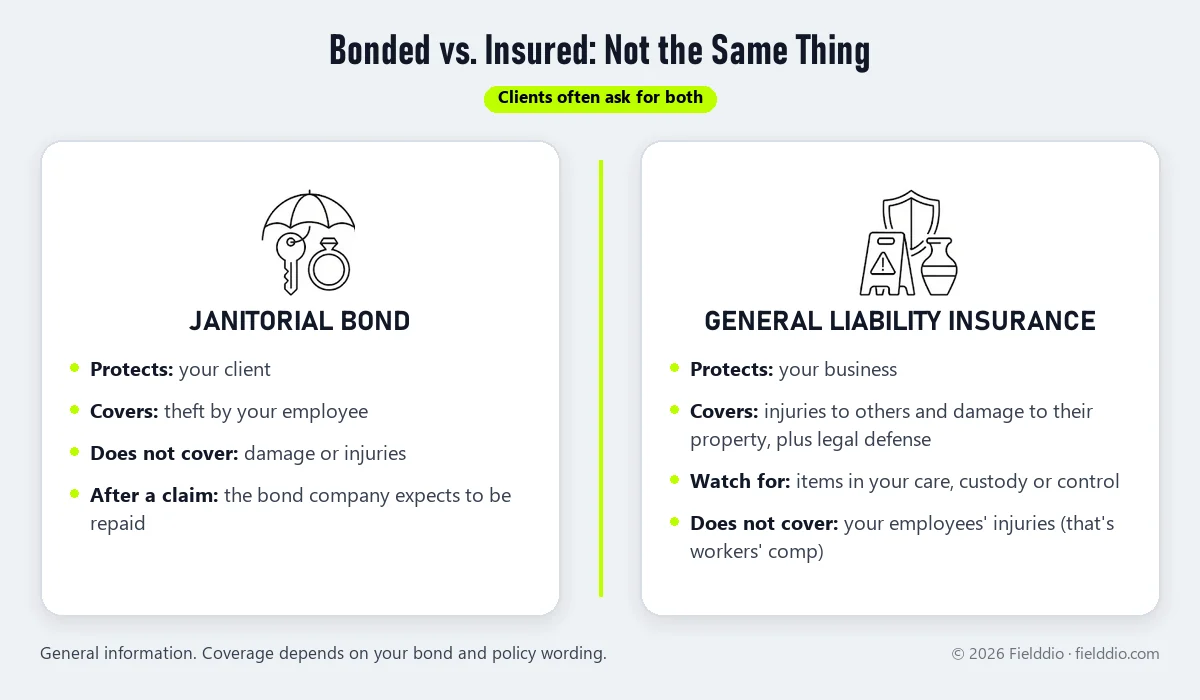
Bonds are generally not required by law; DC’s insurance regulator tells cleaning businesses to “check with the licensing or permitting authority” to find out whether one is needed (DC DISB). In practice, commercial contracts are where you will meet them. And a bond is not a substitute for liability insurance, even if a client only asks “are you bonded?”
Workers’ compensation
Workers’ comp pays medical bills and part of lost wages when an employee is hurt on the job — a back strain from moving furniture, a fall on stairs, a reaction to a chemical. Most policies also include employer’s liability, which helps if an injured employee sues you (Insureon). The premium is a rate per $100 of payroll set by your employees’ job classification; once your premium is large enough, your own claims record (your “experience modification”) also adjusts it. That makes two things critical: an accurate payroll estimate and the right job classification, because both are checked at the premium audit after your policy period ends. Our guides to workers’ compensation rules for small employers and to premium audits and claims go deeper.
Commercial auto and hired & non-owned auto
If a vehicle is owned by your business, your personal auto policy will not cover it, and if a vehicle is used primarily for business, there is likely no coverage under a personal policy either. A personal policy does cover some business use, so the answer depends on how you drive and on your insurer (Insurance Information Institute). Your options:
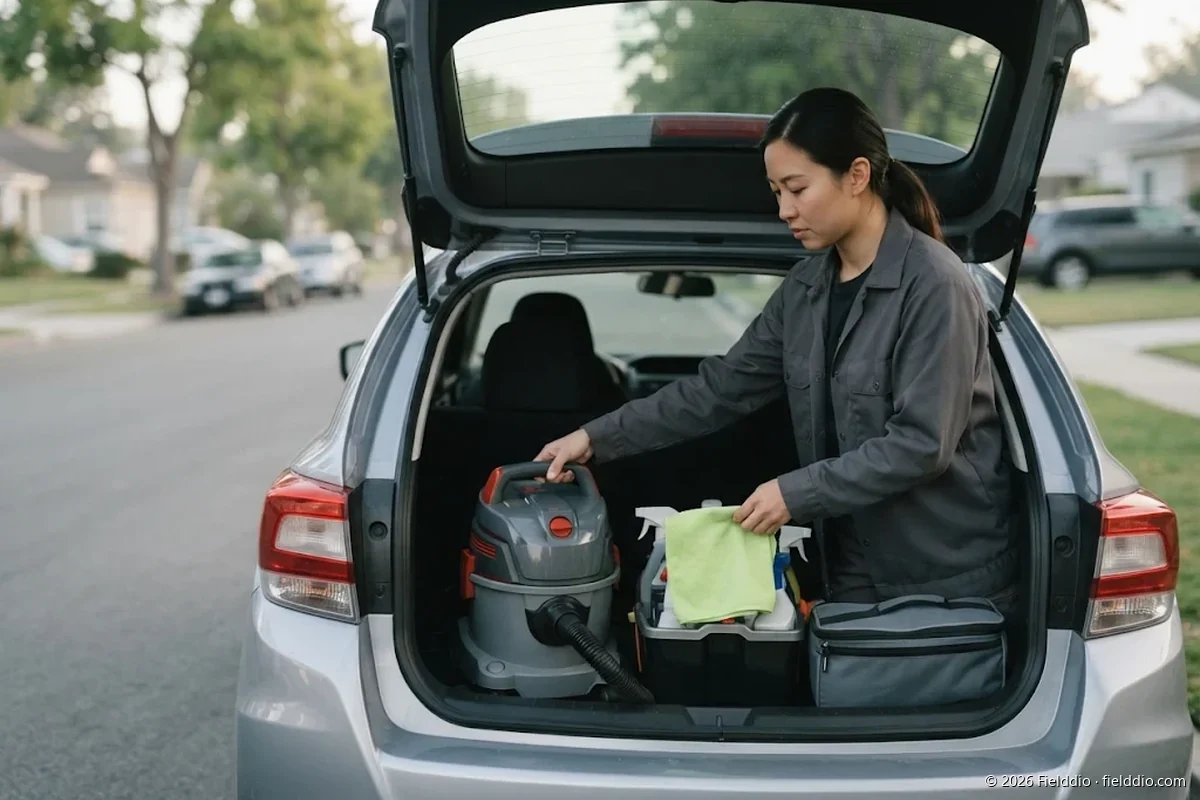
- Commercial auto for vehicles your business owns (vans, a company car).
- Hired and non-owned auto (HNOA) mainly for cars your business doesn’t own, such as an employee’s car or a rental. HNOA covers your business’s liability, not damage to the car or the driver’s injuries, and not commuting (Insureon). It is usually added to a general liability policy or business owner’s policy. If you’re a sole proprietor driving your own car, ask your agent whether HNOA applies or whether you need business use added to your personal policy (or a commercial auto policy).
Add-ons cleaners overlook
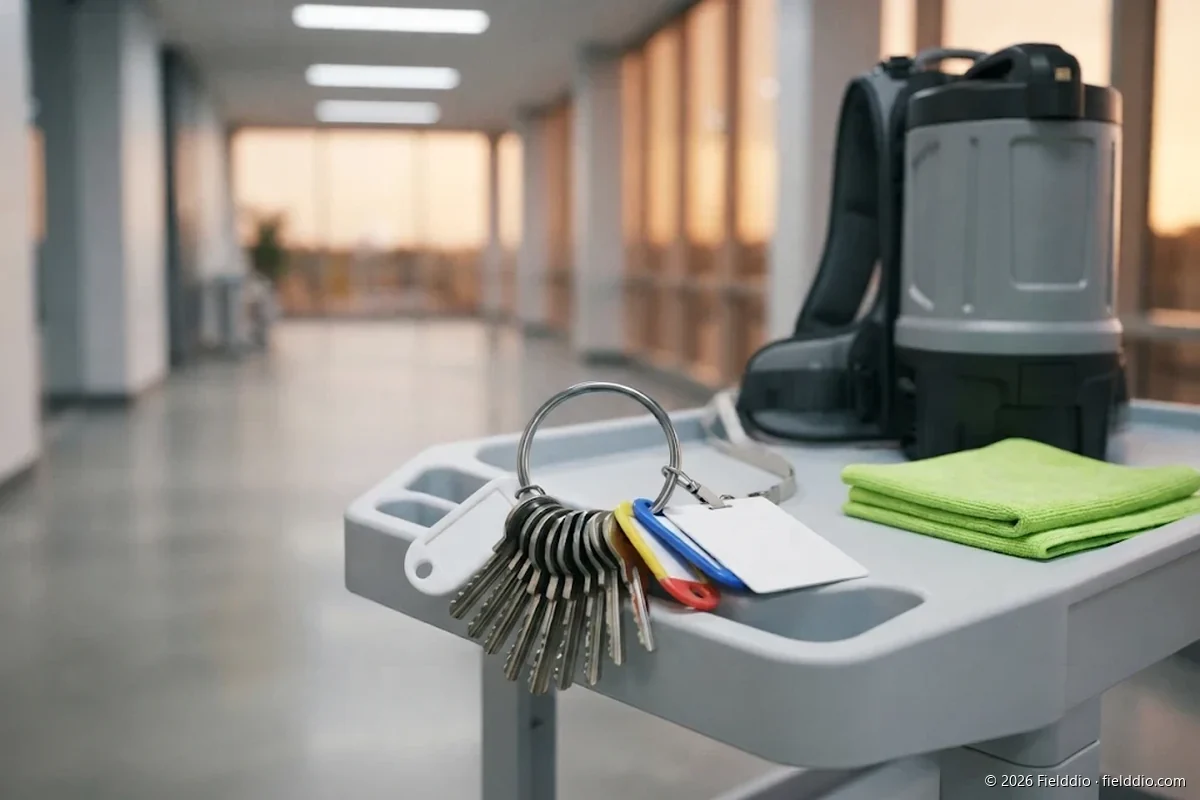
- Lost key coverage. If a crew member loses a client’s keys, the cost of rekeying a building can add up quickly. Lost key coverage is usually an endorsement to general liability and pays to rekey or replace locks. It does not cover an employee who deliberately takes a key (that is a bond question), or losses while the building was left unlocked, such as stolen computers (Insureon; ERGO NEXT). If you hold keys or alarm codes for commercial clients, ask for it.
- Tools and equipment. A business owner’s policy usually covers property only at the address on the policy. Tools and equipment coverage (inland marine) follows your vacuums, extractors and floor machines to job sites and in your vehicle. Check whether it pays replacement cost or actual cash value, and the per-item limits (Insureon). More in our guide to protecting your tools and equipment.
- Umbrella. Some commercial contracts ask for liability limits above $1 million; an umbrella policy is the usual way to get there. See umbrella coverage for higher contract limits.
For how these policies fit together for any small service business, see the 7 core coverage types for small service businesses.
How Much Does Cleaning Business Insurance Cost in 2026/2027?
No independent body publishes market-wide prices for cleaning business insurance. What exists are figures from agencies and insurers, each based on their own customers. Here is what they publish, as of November 23, 2026:
| Source (basis of the figure) | General liability | Workers’ comp | Other published figures |
|---|---|---|---|
| Insureon — policies bought by its cleaning customers; Insureon describes these as averages and says its figures come from the median cost of policies (page updated Oct. 12, 2026) | $59/month ($705/year); house cleaning: $51/month | $114/month ($1,364/year) | Janitorial bond $9/month ($112/year); commercial auto $250/month; business owner’s policy $81/month; umbrella $76/month |
| ERGO NEXT — its active customers over the previous 12 months (data updated Oct. 2026) | 51% of its customers pay $38–$50/month | Median $126/month | Tools & equipment: about $30/month for 77% of its customers (ERGO NEXT’s wording) |
| Simply Business — medians for housekeeping/maid customers who bought July–Dec. 2024 | $30/month ($354/year) | $92/month ($1,106/year) | Policy package $33/month; tools & equipment $21/month |
| The Hartford — its cleaning customers (period not stated on the page) | — | — | Business owner’s policy about $1,553/year (about $129/month) |
Why the numbers disagree
General liability ranges from about $30 to $59 a month across these sources. That is not a contradiction; each figure describes a different group of customers. Insureon says most of its customers have fewer than five employees, revenue from around $50,000 to over $200,000, and five years or less in business; Simply Business’s figure is for housekeeping and maid businesses and dates from late 2024; ERGO NEXT reports a range rather than a single number. None of them is “the price” you will pay. For comparison with other trades, see insurance costs for other trades.
What drives your premium
The factors insurers name most often (Insureon; The Hartford; Simply Business):
- The services you offer. Insureon notes that pressure washing or pool cleaning costs more to insure than house cleaning, and that commercial versus residential work also affects price.
- Number of employees and payroll (especially for workers’ comp).
- Location.
- Coverage limits and deductibles.
- Revenue and years in business.
- Claims history.
Coverage by Business Profile
These profiles use Insureon’s published package averages for cleaning businesses as a reference point; your quotes will differ (Insureon).
Solo house cleaner
You clean homes yourself, maybe with a family member helping occasionally. Start with general liability (and check the care, custody or control gap above), then add a bond if your clients ask for one. Insureon’s “basic” package for cleaning businesses — general liability, tools and equipment, and a janitorial bond — averages $90 a month. If you drive your own car between jobs, ask whether your personal auto policy covers that use.
Residential team of 2–5 employees
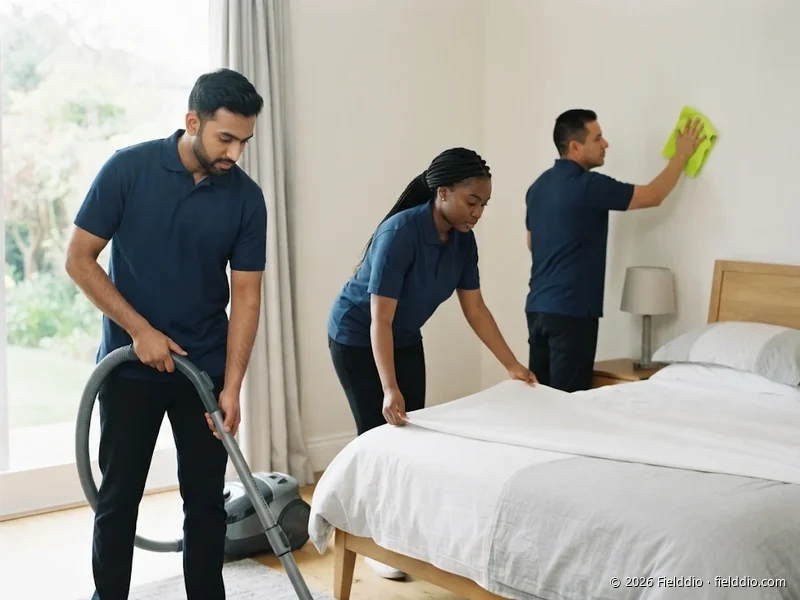
The moment you put someone on payroll, check your state’s workers’ comp threshold; in states like California and New York, one employee is enough. Add hired and non-owned auto if staff drive their own cars between homes. Insureon’s “recommended” package (adding workers’ comp and HNOA to the basic package) averages $205 a month for its cleaning customers.
Commercial / janitorial crew of up to 10
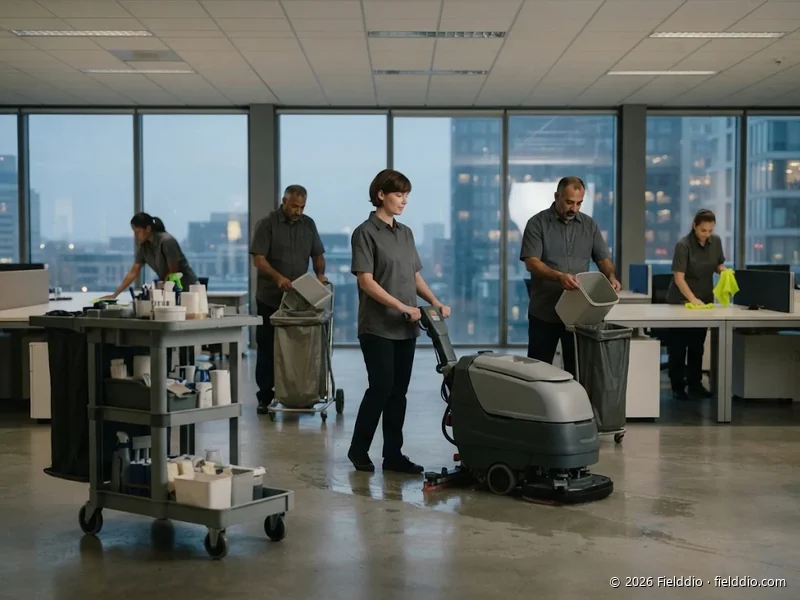
Office and building contracts usually set the limits for you: $1 million / $2 million general liability, additional insured status for the client, a crime policy or bond, commercial auto, and sometimes key and care-custody-control endorsements, as in the public bids above. Insureon’s “advanced” package (workers’ comp, commercial auto and umbrella on top of the basics) averages $590 a month. Compare the contract’s insurance section line by line with your quote before you bid.
Employees vs. 1099 Subcontractors: Who Covers Whom?
Many cleaning businesses pay helpers as independent contractors to keep costs down. Insurance follows the law, not the paperwork: the Department of Labor lists “I signed an independent contractor agreement” and “I received a 1099” among the common myths about worker status (U.S. Department of Labor). If you set the schedule, the methods and the clients, a worker may legally be your employee. If so, you can owe back wages and taxes. The IRS says you may be liable for employment taxes if you had no reasonable basis for treating the worker as a contractor (IRS). And an injured worker won’t be covered if you never bought workers’ comp. Each state decides worker status for workers’ comp purposes.
The federal wage-and-hour rules are also changing: on November 19, 2026, the Department of Labor announced a final rule that replaces its 2024 rule on who counts as an employee under the Fair Labor Standards Act. It takes effect 60 days after it is published in the Federal Register (DOL news release). It doesn’t change IRS rules or your state’s workers’ comp test.
If you genuinely use subcontractors, require each one to carry their own general liability (and workers’ comp where required) and keep a current certificate on file. At audit, your workers’ comp insurer may charge extra premium for any subcontractor who can’t show their own coverage.
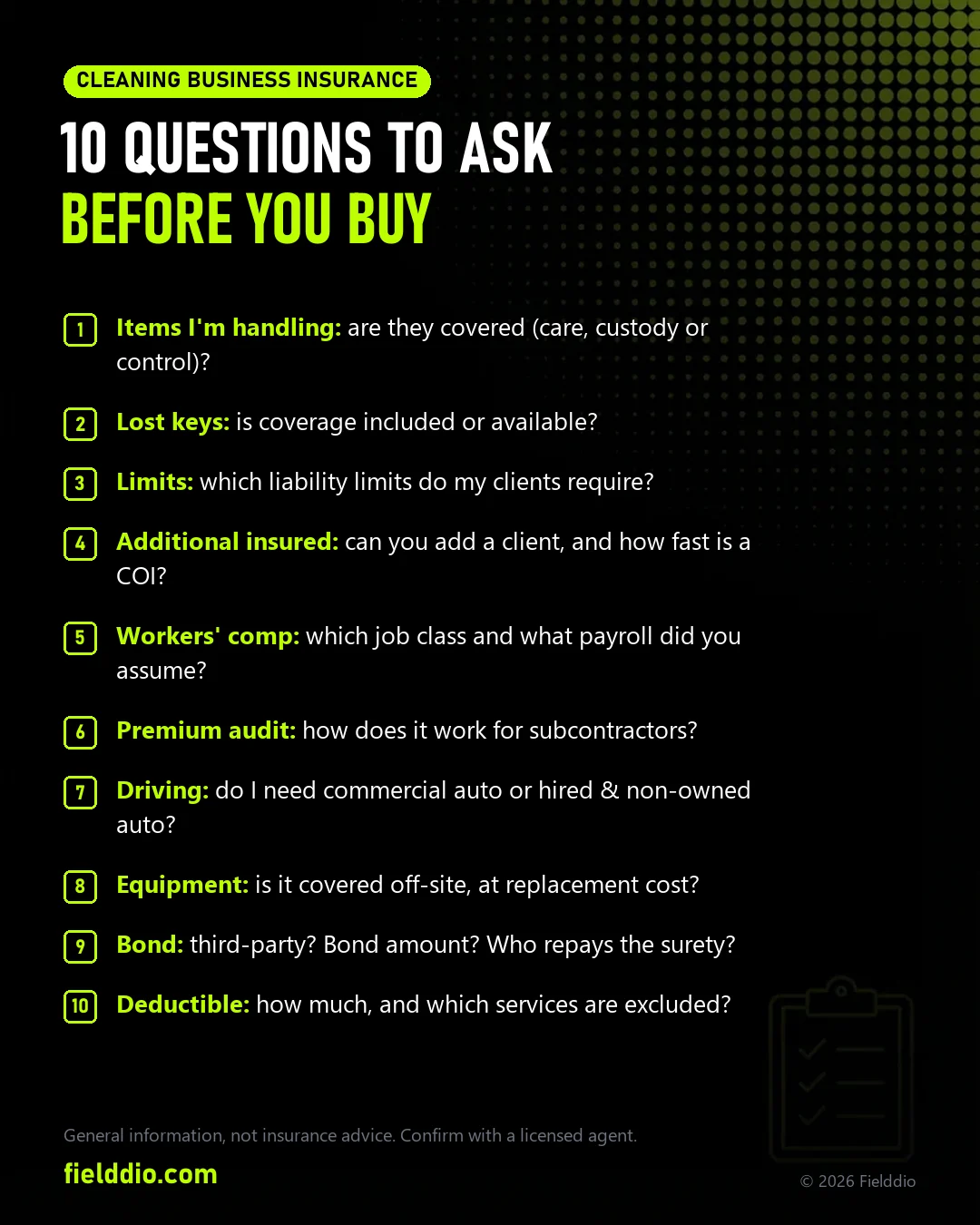
Pre-Purchase Checklist: 10 Questions to Ask Before You Buy
- Does the policy cover damage to items I’m handling (care, custody or control)? If not, what endorsement covers it, and what is its limit?
- Is lost key coverage included or available, and what is the limit per occurrence?
- Which limits do my current and target clients require ($1 million per occurrence / $2 million aggregate is common in published bids)?
- Can you add a client as an additional insured, and how fast can I get a certificate of insurance?
- For workers’ comp: which job classification are my employees in, and what payroll did you assume?
- How does the premium audit work, and how are subcontractors treated?
- Do I need commercial auto or hired and non-owned auto for the way my team drives?
- Is my equipment covered away from my address, at replacement cost or actual cash value?
- For the bond: is it a third-party janitorial bond, what is the bond amount, and who must repay the surety after a claim?
- What is the deductible, and are there exclusions for specific services (pressure washing, window cleaning above ground level, post-construction cleanup)?
How to Get Quotes Without Overbuying
- Write down your requirements first: your state’s workers’ comp threshold, your vehicles, and the insurance clauses of your biggest client contracts.
- Ask for at least two or three quotes with the same limits and deductibles. A cheaper quote with a $500,000 limit is not comparable to one with $1 million.
- Compare the endorsements, not just the price: care-custody-control, lost keys, HNOA, additional insured.
- Check how each insurer handles certificates and payments — online certificates and pay-as-you-go workers’ comp matter for a small cleaning team.
- Review the policy once a year or whenever you hire, add a vehicle or sign a commercial contract.
You can buy directly from insurers or compare several carriers through an online agency. Our comparison of small business insurance providers explains the differences between the main options.
Practical Examples
Hypothetical situations for illustration. Whether a claim is paid depends on your policy wording.
- The broken TV. A cleaner knocks a client’s TV off its wall mount while dusting. Under a policy with a care, custody or control exclusion, general liability may not pay; an endorsement would.
- The wet floor. A client slips on a kitchen floor you just mopped and breaks a wrist. This is the core general liability claim: injury to a third party.
- The lost keys. A crew member loses the key ring for an office building. Without lost key coverage, rekeying the building is your bill.
- The missing ring. A client says jewelry disappeared after a visit. A janitorial bond responds only to covered employee theft under its terms, and the surety will expect to be repaid. It does not replace a liability policy.
- The back injury. An employee hurts their back moving a couch. Workers’ comp pays medical costs and lost wages; without it, in a state that requires it, you face the bill and penalties.
- The fender-bender. You rear-end another car driving between two homes in your personal car. Your personal policy may or may not respond to business use; depending on how your business is set up, HNOA may cover the business’s liability. It never covers damage to your own car.
- The van break-in. Thieves steal a carpet extractor from your locked van overnight. That is a tools and equipment claim, subject to the policy’s conditions for theft from vehicles.
Frequently Asked Questions
Do I need insurance to clean houses as a self-employed cleaner?
General liability usually isn’t required by state law for a solo cleaner, but many clients ask for proof of insurance, and one claim can cost far more than a year of premiums. Workers’ comp is generally not required for a sole proprietor with no employees.
Is cleaning business insurance required by law?
Parts of it. Workers’ comp is required by state law once you pass your state’s employee threshold (Texas is the main exception), and nearly every state requires minimum auto liability coverage on vehicles. General liability and bonds are usually required by clients rather than by law. California also requires most commercial janitorial businesses to register with the state every year.
What does “bonded and insured” mean for a cleaning business?
“Insured” usually means you carry general liability insurance. “Bonded” means you have a janitorial (surety) bond that reimburses a client if one of your employees steals from them. They protect against different things, and a bond does not replace insurance.
Does a janitorial bond cover property damage?
No. A janitorial bond covers theft by employees, not accidental damage. Damage is a general liability question.
How much does insurance cost for a small cleaning business?
Published figures put general liability at roughly $30 to $59 a month and workers’ comp at roughly $92 to $126 a month, depending on the source and its customers (figures published by Insureon, ERGO NEXT and Simply Business, checked November 2026; Simply Business’s data covers late 2024). Your price depends on services, location, employees, limits and claims history.
Do I need workers’ comp if I only use 1099 subcontractors?
Possibly. If your “subcontractors” work like employees, they may legally be employees, and your state may require coverage. If they are true independent contractors, require them to carry their own insurance and keep their certificates on file; otherwise your workers’ comp insurer may charge extra premium for them at audit.
Does general liability cover a client’s item I break while cleaning?
Not always. Many policies exclude damage to property in your care, custody or control, which can include items you are cleaning. Ask your insurer in writing and add an endorsement if needed.
What happens if I lose a client’s keys?
Without lost key coverage, the cost of rekeying or replacing locks is usually yours. Lost key coverage is typically an endorsement to general liability.
Related Fielddio Guides
- How general liability insurance works
- Workers’ compensation rules for small employers
- How to send a certificate of insurance (COI)
- Protecting your tools and equipment
- Marketing your cleaning business — “bonded and insured” is a selling point, not just a requirement.
Sources
All sources read on November 23, 2026.
State and federal agencies – California DIR — Workers’ compensation FAQs; Janitorial registration FAQs – New York Workers’ Compensation Board — Insurance requirements; Who must be covered – Georgia State Board of Workers’ Compensation — Employer information – North Carolina Industrial Commission — FAQs – Florida Division of Workers’ Compensation — Coverage requirements – Alabama Department of Labor — Coverage threshold – Missouri Department of Labor — Workers’ comp requirement – Texas Department of Insurance — Workers’ comp for employers; Auto insurance guide – New Hampshire Insurance Department — Automobile insurance consumer guide – Pennsylvania Business One-Stop Shop — Cleaning businesses – DC Department of Insurance, Securities and Banking — Business insurance: cleaning services – U.S. Department of Labor — Misclassification myths; Nov. 19, 2026 news release – IRS — Independent contractor or employee
Published janitorial bids – DC Department of General Services — Citywide janitorial RFP, insurance section – University of Central Arkansas — Custodial services RFP (2024)
Reference and industry sources – Insurance Information Institute — Business vehicle insurance – IRMI — Care, custody, or control – Insureon — Cleaning business insurance cost; General liability; Janitorial bonds; Workers’ comp; Fidelity bonds; Hired and non-owned auto; Tools and equipment; Lost key coverage – ERGO NEXT — Janitorial insurance cost; Lost key coverage – Simply Business — Cleaning business insurance cost – The Hartford — Cleaning business liability insurance
This post contains affiliate links. If you make a purchase through these links, we may earn a commission at no extra cost to you.