

You sent the estimate on Monday. Detailed scope, fair price, professional presentation. You were confident about this one.
By Wednesday, nothing. By Friday, still nothing. You told yourself the client was busy. A week later, you followed up — and they’d already hired someone else.
Most contractors in that situation assume they lost on price. But here’s what happens more often: the client was ready to move forward, and your competitor checked in first. That’s the real problem. And it has nothing to do with your skills or your quote.
Understanding why contractors lose leads after sending estimates starts with a simple shift: stop looking at the estimate, and start looking at what happens in the days after it goes out.
The Real Reason You’re Not Winning More Jobs
It’s Not Your Price
Most contractors who lose a job after sending a quote assume they were undercut. That’s almost never the full story. Homeowners — especially for residential projects like painting, roofing, or remodeling — don’t always pick the lowest number. They pick the contractor who made them feel most confident.
Price matters. But it rarely explains why a solid estimate disappears with no response at all.
It’s Not Your Competition
When a lead goes quiet, the instinct is to blame a competitor with lower overhead or a slicker website. But the contractor who wins that job isn’t always more skilled, cheaper, or better reviewed.
Often, they’re just more present. They followed up. They checked in. They were there when the client was finally ready to say yes.
It’s the Gap Between “Estimate Sent” and “Follow-Up Done”
The real problem lives in the silence between sending your estimate and hearing back. Most contractors do nothing in that window — because they’re busy running jobs, managing crews, and handling everything else.
The estimate sits in the client’s inbox. The client compares other quotes. Time passes. A competitor calls. That’s the gap. And it’s where most jobs are actually lost.
What Happens in the Days After You Send an Estimate
How Homeowners Actually Make Decisions
Homeowners don’t move fast. They get three estimates, take a week to think it over, discuss it with a spouse, wait for the next paycheck. Life gets in the way.
During that window, they’re not cold — they’re undecided. And undecided clients are winnable. They just need the right contact at the right time.
Why the Contractor Who Follows Up First Usually Wins
When a homeowner finally decides to move forward, they call whoever is top of mind. That’s usually the last contractor who touched base — not necessarily the best one, and not necessarily the cheapest.
A simple follow-up message — “Just checking in, any questions about the estimate I sent?” — is often enough to tip the scale. Most contractors never send it.
The Window You’re Missing Without Knowing It
The follow-up window is shorter than most people think. The first 24 to 48 hours after sending an estimate are the highest-engagement period. The client has just reviewed your proposal. They have questions. They’re comparing options.
If you’re not present in that window, someone else fills the space. Not because they’re better — because they showed up.
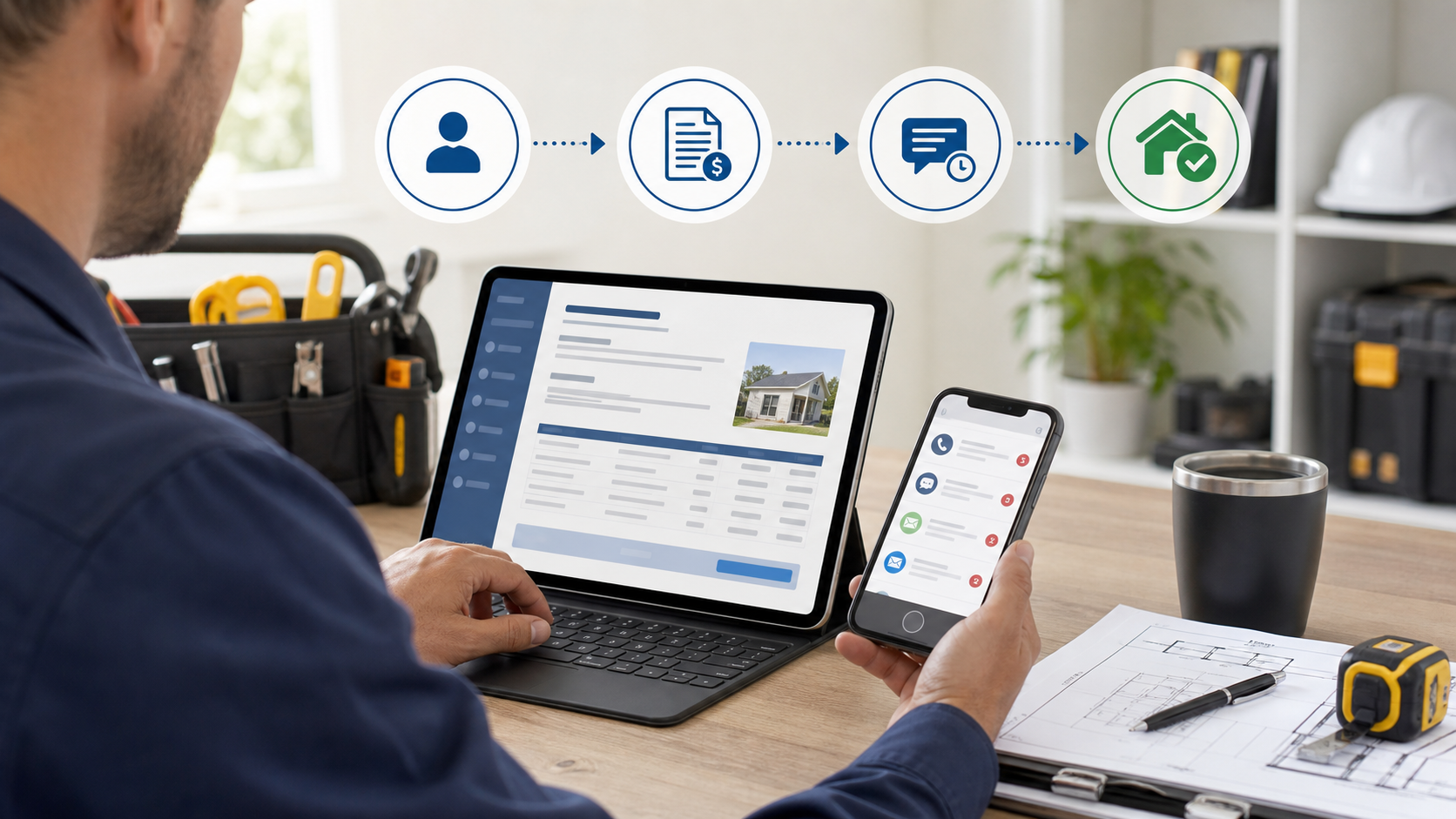
DripJobs automates follow-ups after every estimate — so no lead goes cold while you’re on the job site.
The Most Common Follow-Up Mistakes Contractors Make
Waiting Too Long to Check In
The most common mistake is also the simplest: waiting too long. Most contractors follow up after three to five days — if at all. By that point, the client has already moved on mentally, or signed with someone who reached out first.
The first follow-up should go out within 24 to 48 hours of the estimate. Not to push for a decision — just to confirm receipt and offer to answer questions.
Following Up Once and Stopping
One follow-up isn’t a process. It’s a single message that gets missed, ignored, or buried in a busy inbox.
Effective follow-up runs across two to three touches over 7 to 10 days. Each message is short and adds something: a reminder, an offer to clarify, or simply a signal that you’re still available and paying attention.
No System, No Consistency
A follow-up that happens when you remember isn’t a system. It’s a habit that breaks down the moment you get busy — which is exactly when you need it most.
Contractors who consistently close more estimates usually have some form of structure around follow-up. Not a complicated process — just a defined sequence: what to send, when to send it, how many times.
Relying on Memory Instead of a Process
Your memory is already competing with incoming calls, job site issues, crew questions, and client texts. Tracking which estimates still need a follow-up in your head is a reliable way to let the important ones fall through.
This isn’t a character flaw — it’s a system problem. System problems need system solutions.
What a Good Follow-Up Process Actually Looks Like
Timing: When to Follow Up After Sending an Estimate
The timing framework that works for most home service contractors is straightforward:
No pressure tactics. No fake urgency. Just consistent, professional presence at the right moments.
What to Say in a Follow-Up Message
Keep it simple. The goal isn’t to close the deal in a text — it’s to stay in the conversation. A message that works references the specific job, offers to answer questions, and gives a clear, easy next step.
For full message templates and scripts, see our guide on how to follow up after sending a quote.
How Many Times Should You Follow Up?
Two to three times over 7 to 10 days is a reasonable baseline for most home service businesses. That’s enough to stay visible without becoming intrusive. After three touches with no response, a brief “closing” message is fine — something that acknowledges the silence and leaves the door open without pushing.
Why Most Contractors Can’t Maintain This Process Manually
You’re Running a Business, Not a Sales Department
The biggest obstacle to consistent follow-up isn’t awareness — it’s bandwidth. You’re managing jobs, ordering materials, supervising crews, and handling everything else that keeps the business running. Tracking which estimates need a follow-up today, on top of all that, is one task too many.
Most contractors know they should follow up more consistently. They just don’t have the capacity to do it manually at scale.
The Jobs That Fall Through the Cracks
Every contractor has a version of this: a lead they meant to follow up on, didn’t get to, and later found out they could have won. One busy week and three estimates slip through. That’s not a personal failure — that’s what happens when follow-up depends entirely on memory.
The Case for Automating Your Follow-Up
When follow-up is manual, it’s inconsistent. When it’s inconsistent, leads fall through. A simple automation changes that: a trigger that sends a follow-up at a defined time after the estimate goes out — without you having to remember to do it.
That’s not complicated technology. It’s a process running in the background while you’re on the job site. If you’re comparing tools for this, our roundup of the best contractor CRM software covers the main options side by side.
The Tool Contractors Are Using to Fix This
How DripJobs Handles Follow-Ups Automatically
DripJobs is a CRM built specifically for contractors and home service businesses. Its core workflow covers the full sales cycle: leads, follow-ups, proposals, approvals, invoicing, and payments — in one place.
Frequently asked questions
The Estimate Is Step One. The Follow-Up Is What Closes It.
If your follow-up process is “I’ll remember to check in,” it’s already a problem. Not because you’re disorganized — because that approach breaks down every time you’re busy, which is most of the time.
A structured follow-up process, even a simple one, is the difference between leads that close and leads that go quiet. The contractors who win more work aren’t doing anything more sophisticated. They’re just showing up in the right moments — consistently.
If you want a system that handles this for you, see the best contractor CRM software options available — or go directly to DripJobs to see if it fits your workflow.
This post contains affiliate links. If you make a purchase through these links, we may earn a commission at no extra cost to you.